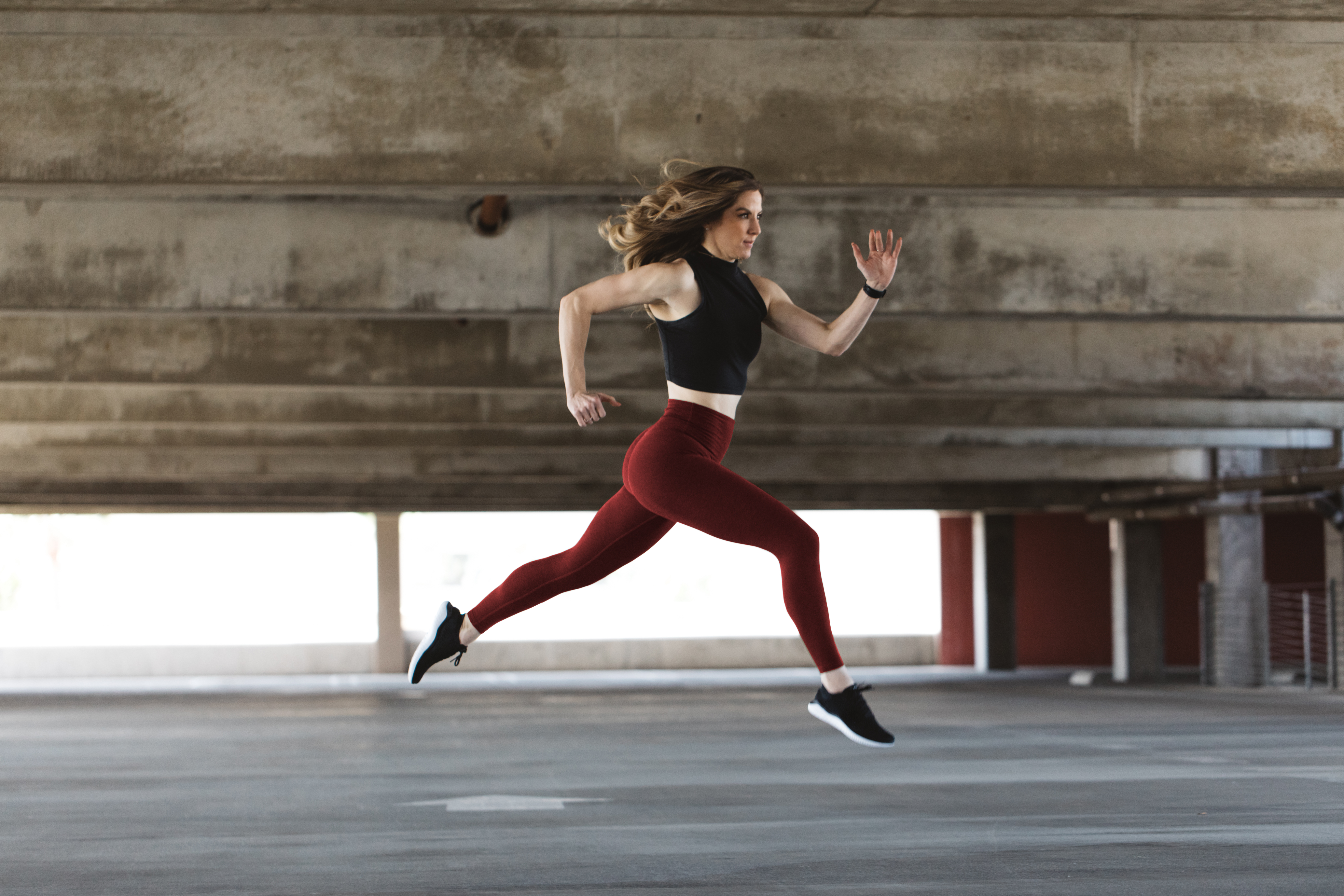
Running builds endurance, but it rarely builds the hip stability, single-leg strength, and flexibility your body needs to run well long-term. Barre fills those gaps, giving runners the structural support and cross-training balance that miles on the road cannot provide.
Is Barre Good for Runners?
Running strengthens your quads and calves but leaves your glutes, hip flexors, inner thighs, and deep stabilizing muscles underdeveloped. These muscle groups control your stride, protect your knees, and keep your pelvis level with every foot strike. Weak stabilizers force compensations that lead to common injuries like IT band syndrome, runner's knee, and shin splints. Barre directly targets these neglected muscles through isometric holds and small-range movements that build strength without adding bulk. Stronger stabilizers mean a more efficient stride, better shock absorption, and fewer overuse injuries throughout marathon training.
What Happens in a Barre Class
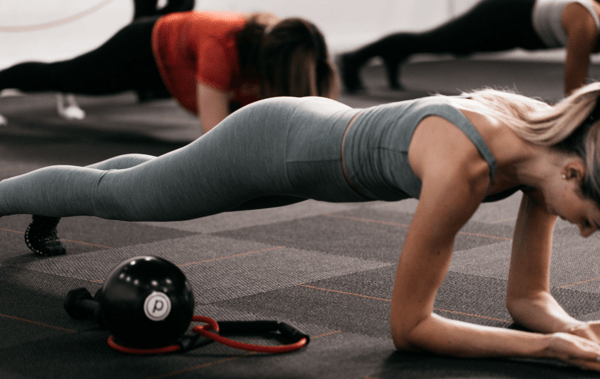
A typical Pure Barre class moves through a warm-up, then targets all of the major movers of your body: arms, thighs, glutes, and core using a combination of full ranges of motion to mobilize the joints. Precise muscular endurance sequences feature the signature isometric exercises to build endurance, stability, and real strength, peppered with stretches throughout class and finishing with a deep cool-down for the muscles. No dance background or prior barre experience is required. Teachers cue and demonstrate every movement throughout class, and offer modifications for different fitness levels, so first-timers can follow along confidently. The pace is energetic, but controlled. Beginners should start with Pure Barre Engage, our 30-minute introductory class built to give you a sampling of how we move at Pure Barre.
The Barre Moves That Help You Run Faster and Longer
Parallel glute, or what we call seat, work isolates the glutes in the range runners use to push off, building power behind faster splits. Thigh work strengthens the quads and inner thighs that stabilize your knees on every landing, reducing impact pain. Standing seat work trains single-leg balance and hip extension, directly improving stride length and running economy. Core planks build the deep abdominal and back strength that keep your torso upright late in a run, when form typically breaks down. Together, these movements build the strength runners need to hold form mile after mile.
How to Add Barre to Your Training Plan
Add barre once or twice a week on easy or rest days, never before a hard run or race. Early soreness in your glutes and hips is normal as your body adapts to new movement. Start with Pure Barre Engage or drop into any format that excites you (each with unique benefits and flow) to build a strong foundation.
Free First Class
Ready to run stronger, longer, and injury-free? Book your free first class at Pure Barre today and feel the difference cross-training makes on the road.